Skip to content
Agorix
Updated 29 July 2026

How to presell an online course: proof before you build it.

A pre-sale is the cheapest way to find out whether anyone wants the course you were about to spend three months making — and the fastest way to damage a reputation if you do it carelessly. This is the honest version: what you can promise before module one exists, what has to be on the page before anyone pays, the threshold you set yourself, and how to read the answer either way.

04disclosures
16promise items
05ways to read a no

What you will have at the end

  • A pre-sale offer you can describe honestly before a single lesson exists
  • The four disclosures that belong on the page before anyone can pay
  • A founding-cohort framing that is a real trade rather than a discount with a name
  • A refund posture chosen deliberately and written down before the cart opens
  • A validation threshold derived from your own arithmetic, not a number you read
  • A plan for module one that makes the delivery dates you promised credible
  • Five readings of a pre-sale that did not hit, and the honest exit from each
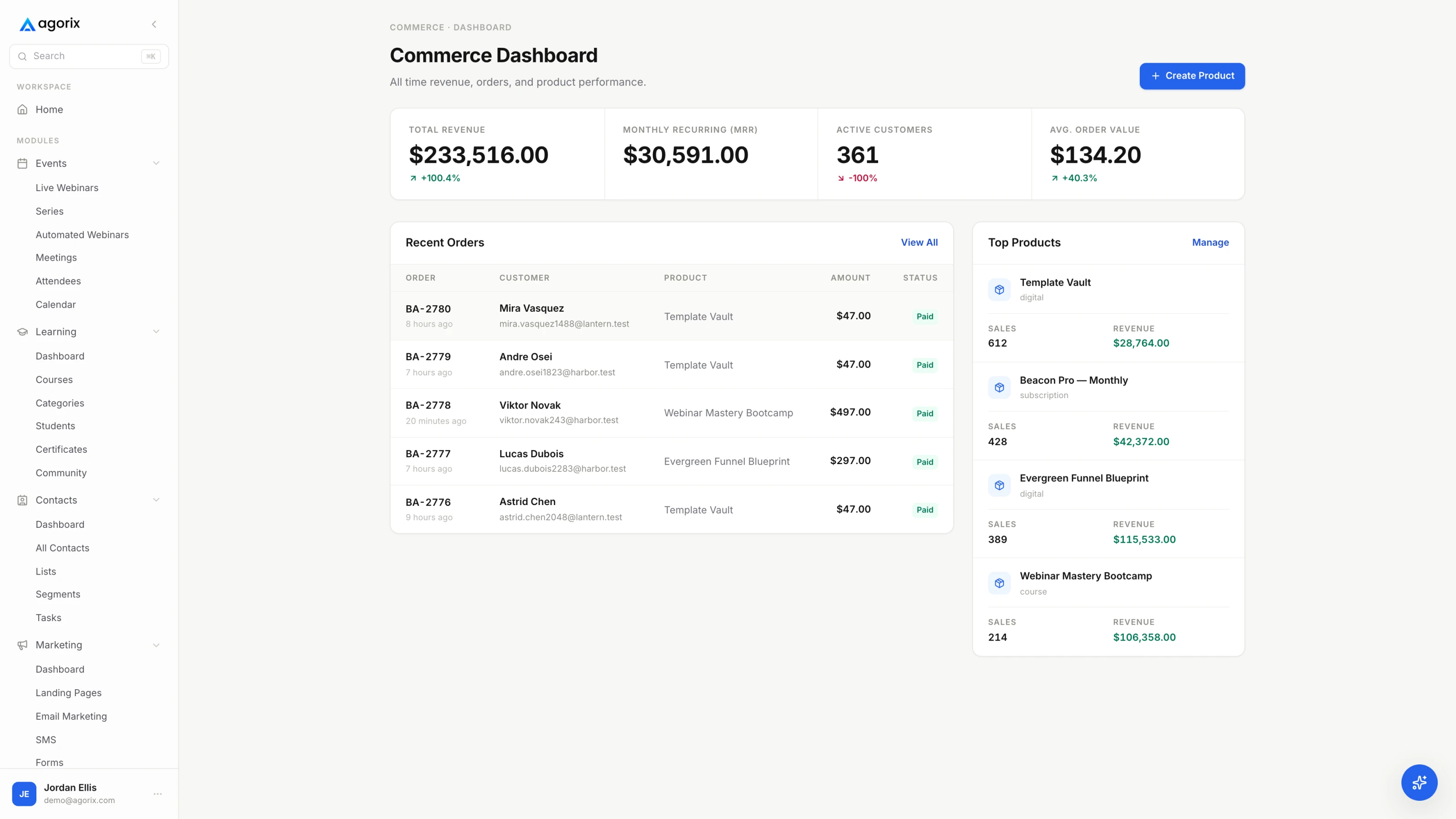
A commerce dashboard showing revenue, monthly recurring revenue, recent paid orders and the products earning them.
Rule 01The honesty bar

The biggest risk in a pre-sale is not that nobody buys.

It is that people buy, and later work out they were not told what they were buying. Everything else in this guide is technique. This part is the condition the technique runs under, which is why it comes first.

Preselling means taking money for something that does not exist yet. That is ordinary commerce — the same arrangement as a pre-ordered book, a ticket to a show that has not been staged, or a building sold off plan. What makes those normal is that the buyer knows. A pre-sale becomes something else entirely at the exact moment a reasonable buyer could finish your page believing the course already exists.

The distance between those two things is usually one paragraph. It is not a legal technicality, a disclaimer in grey text at the bottom, or a line in terms nobody opens. It is four facts, stated where the buying decision happens.

  1. It is not built yet. Said in the same size type as everything else on the page, and said before the price rather than after it.
  2. When each part arrives. A first-module date, a cadence, and a final date. “Coming soon” is not a date and everybody knows it.
  3. What happens if too few people buy. Whether you will build it anyway, refund, or decide later — and if you will decide later, the date you will decide by.
  4. What happens if you are late. Because you might be. Say now what you will do then, and you will find it much easier to do it.

Every one of those is a fact you can verify on the day you write it. That is the test for everything on a pre-sale page: could you demonstrate, today, that this statement is true? “Twelve modules, first one on the fourteenth” passes. “The complete system for [outcome]” describes a thing you have not made, and “students typically see [result]” describes students you do not have.

The money is not yours yet

It is in your account, and it is not yours in any sense that matters. What you have taken on is an obligation with dates attached, and the honest way to hold a pre-sale in your head is as a debt you have agreed to repay in work by a specific day. Spending it on anything other than building the course is how creators end up delivering late, thin, or not at all.

One practical note that is worth ten minutes before the cart opens rather than an afternoon afterwards: rules on advance payment, promised delivery dates and refunds differ by country and by payment processor, and a pre-sale is precisely the situation those rules exist for. Confirm what applies to you and what your processor expects before you open, not after somebody asks for their money back.

Step 01What you are sellingStep 01 / 05

You cannot sell the course. You can sell everything around it.

The instinct is to describe the finished product and hope nobody asks when it ships. The better offer is built from things that are true on the day you write them — and it is a more persuasive offer, because specificity is what a buyer is actually weighing.

Five components, all verifiable today:

  • A specific outcome for a specific person. Not “learn [subject]” but “get from [starting point] to [finishing point], if you are [the person this is for]”. The narrower the person, the easier the pre-sale, because a pre-sale asks for trust and trust is easier to give when someone is obviously describing you.
  • A dated schedule. First module date, cadence, final module date. This is the component that separates a pre-sale from a promise, and it is the one people check.
  • A scope you can name. The module count and the working title of each. You do not need the lessons written; you need to know what the thing contains. If you cannot list them, you are not ready to sell them.
  • Access during the build. The one thing a finished course cannot offer and a pre-sale can: your attention while it is being made. Calls, a channel, feedback on their work, your inbox. This is the strongest part of the offer and the part most people leave out.
  • A price, and what it becomes. Only include the second half if you will actually charge it. Covered in step four.

The third component is where pre-sales usually fail before they start. A scope you cannot name is a scope you cannot deliver against, and it is also the scope that grows every time a buyer asks a question. Write the curriculum outline before the sales page, not after it — the outline is the artifact that makes the promise honest, and it doubles as the section of the page that does the most selling.

What you cannot put in the offer

Results, because you have no students yet. Testimonials, for the same reason — and no, not from people who took your free workshop and are describing something else. Unspecified bonuses, which are a promise of unnamed work you will resent later. A “lifetime access and updates” clause you have not thought through, which is a commitment with no end date attached to a business that might change. And a curriculum you have not outlined, which is the one that quietly turns into a four-month build.

The pre-sale disclosure block. Plain text, brackets to replace, written to sit directly above the buy button.

[Read this before you buy.]

[Course name] does not exist yet. I am building it, and you are buying it
before it is finished. Here is exactly what that means.

What exists today:  [the outline, the first module, or nothing but this
                    page — say which]
First module:       [date]
Then:               [one module every [n] weeks, or the specific dates]
Last module:        [date]
You get:            [modules, calls, templates, feedback, community —
                    list only what you will actually deliver]
You do not get:     [the things people will otherwise assume are included]

If fewer than [number] people buy by [date], I will not build it, and I
will refund every buyer in full by [date]. Either way, I will email you on
[date] and tell you which it is.

If I am running late, you will hear it from me before the date passes,
not after.

Refunds: [your terms, in one or two plain sentences].

Questions: [email address]. I answer within [time].
Step 02The minimum honest promiseStep 02 / 05

Sixteen things a buyer should not have to ask for.

The disclosure block covers the four non-negotiables. This is the fuller list — the questions a careful buyer would ask if they had you on the phone, answered on the page instead so they do not have to.

Two of them deserve attention because they are the two most often left vague. The first is what is not included: every pre-sale buyer builds an imaginary version of your course, and the imaginary version always has more in it than yours will. Naming the exclusions is not weakening your offer, it is preventing a refund request in month two.

The second is the date by which you will tell them either way. A buyer who paid three weeks ago and has heard nothing does not assume you are working hard. Set the date, put it on the page, and then treat it as an actual commitment — it is the cheapest trust you will ever buy, and missing it is the most expensive silence.

Repeat it in the receipt

Sales pages get closed; receipts get kept and searched for months later. Whatever the page said about dates, scope and refunds should appear again in the receipt and the first email, in the same words. When a buyer goes looking for what they agreed to, they should find it in their inbox rather than in their memory of a page that has since changed.

The minimum honest promise0 / 16 written

On the page, before anyone can pay

In the receipt and the first email

Step 03The founding cohortStep 03 / 05

A real trade, not a discount with a nicer name.

“Founding cohort” is the framing that makes a pre-sale coherent — but only if there is something on both sides of it. Used as decoration on a plain discount, it is the kind of language buyers have learned to discount in turn.

State the trade plainly, because it is a good one. They pay less and get more of you; you get paid before you build and get the questions that tell you what to build. The price is lower because they are carrying risk you would otherwise carry alone — not because you are being generous, and saying so is more persuasive than the alternative.

What they get

Access and influence

A lower price they keep, live calls during the build, a channel where you actually answer, and real influence over what gets covered. The last one is the part that matters most and costs you least — people who shaped something finish it.

What you get

Questions, in advance

Funding before the build, and a steady supply of the exact confusions your course has to resolve. A founding cohort is the difference between guessing at module four and being told what belongs in it.

Three rules that keep it honest

  1. Cap it, and mean the cap. A founding cohort is small by definition — that is what makes the access deliverable. If you say twenty-five places, sell twenty-five. A cap you quietly lift is the same as a deadline you extend: it works once and costs you every future one.
  2. Say what founding status includes permanently, and what it does not. The locked price, the calls during the build, future updates — pick deliberately and write it down. Vague permanent benefits are the ones you end up honouring for years or quietly dropping, and both outcomes are worse than a specific list.
  3. Do not run a founding cohort three launches running. By the third it is not a founding price, it is your price with a story attached, and the people who bought first will notice before you do. If you want a permanently lower entry point, make one and call it what it is.

A founding cohort also does something structural for you: it puts other people’s calendars around your build. A course with no cohort finishes when you get to it. A course with twenty people expecting a call on Thursday finishes.

Step 04Price and refundsStep 04 / 05

Decide the refund posture before you need one.

Pricing a pre-sale is mostly the ordinary problem of pricing a course, with one extra rule. Refunds are the part that is genuinely different, because a pre-sale buyer can want their money back before anything has been delivered at all.

The price, and the one extra rule

Work out the finished price first — what the course will sell for when it exists — and then set the pre-sale below it. The extra rule is that the finished price has to be a price you will actually charge. Printing a number you never intend to charge, purely so the pre-sale looks like a saving, is a fake anchor, and it is the most common dishonesty in this entire category precisely because it feels like marketing rather than lying. If the course is going to be $400, the pre-sale is $250 against $400. It is not $250 against $1,200.

How to arrive at the finished number in the first place is its own problem — the course pricing guide and the broader digital product pricing guide both work through it. Do that first; the pre-sale price only means anything relative to a real one.

Three refund postures

  1. Full refund any time before the first module ships. The most honest and, in practice, the cheapest — a buyer who changes their mind before delivery has cost you nothing, and the policy removes most of the reason to hesitate at the checkout. It also does something quieter: it makes your first-module date matter to you as much as it does to them.
  2. Full refund within a stated window after the first module. The posture most buyers already expect, and the one that pairs well with the first. State the window in days from the delivery date, not from the purchase date, because the purchase date could be two months earlier.
  3. No refunds. Defensible only if the page said so in plain language, above the buy button, in ordinary type. Even then it sits badly on a pre-sale, where the buyer is trusting you with a thing that does not exist, and payment processors tend to have their own view. Choose it deliberately or not at all.
The refund that is not optional

If you cancel the course, everybody is repaid in full, without asking.

Write that on the page before you open. Writing it afterwards, once you already know you are not building it, is worth nothing to anybody — least of all to you. And process the refunds the week you decide, not the month you get to it: a buyer who waits four months for a module that never arrives has both a valid grievance and a chargeback case, and the fix for that was never tighter terms.

Whatever you choose, write it in words a buyer could quote back to you, and put the same words in the receipt. The refund policy and guarantees guide covers wording that survives contact with an unhappy customer.

Step 05Your thresholdStep 05 / 05

The number has to be yours, and it has to exist before you open.

You will find people who say ten buyers validates an idea, and people who say twenty-five. Those numbers came from someone else’s price, someone else’s audience and someone else’s cost of building. Borrowing one gives you false precision about the only decision this whole exercise exists to inform.

Derive yours instead. It takes about ten minutes and it starts with what building the thing will actually cost you.

LineWhere your figure comes from
Build hoursTime yourself making one complete lesson, multiply by the number of lessons, then add half again for the parts that are not recording.
Value of an hourWhat you would have earned doing the next best thing with that time. Client work, an existing offer, or whatever you are giving up.
Hard costsEditing, design, hosting, software, anyone you will pay — the money that leaves regardless of whether it sells.
Cost of building itHours × value of an hour + hard costs.
Buyers to cover itCost of building it ÷ your pre-sale price. This is a floor, not a target.
Illustrative arithmetic — replace every number

The shape of the calculation, with invented inputs.

Suppose you estimate 60 build hours, value an hour at $80, and expect $600 of hard costs. Building it costs $5,400. At a $250 pre-sale price that is 22 buyers to cover the build and nothing else. These figures are here to show the arithmetic, not to suggest what yours should be — every input above is a decision only you can make, and changing any one of them moves the answer a long way.

The floor is not the threshold

Covering the build is the minimum at which the project is not a loss. The threshold is a different question: the number below which you would rather not spend the next several weeks on this at all. That is a judgement about your time and your priorities, and it usually sits above the floor. Write it down somewhere you will see it on the last day of the window, because the temptation at buyer six against a threshold of twenty is overwhelming, and it is exactly the moment the number exists to survive.

One refinement worth making: a threshold does not have to be a raw count. Ten buyers from the audience you built this for tells you considerably more than forty from a discount list who will never finish it. If you can tell the difference, put the qualification in the threshold rather than pretending the count is the whole story.

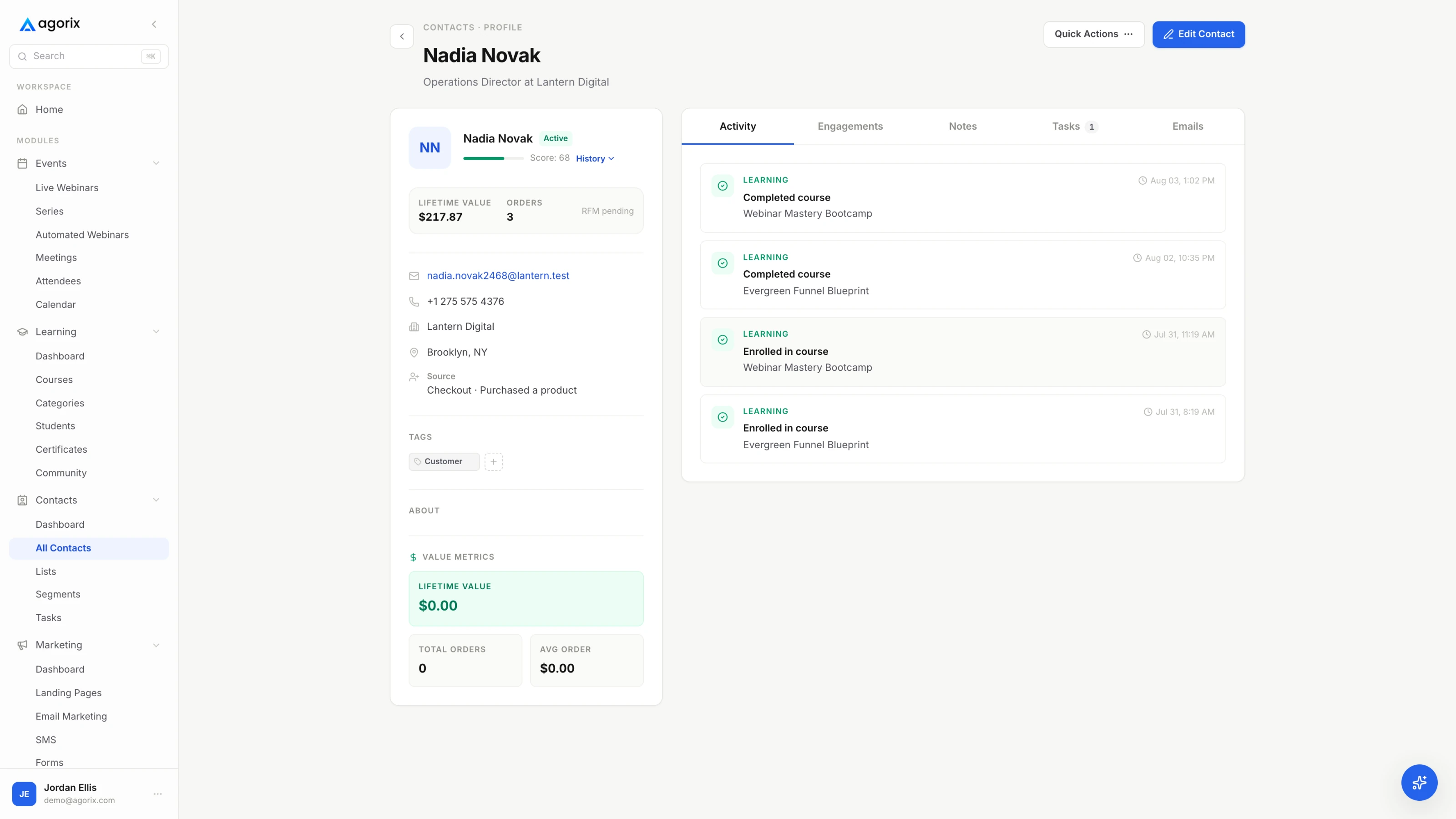
A contact record showing registration, watch time, offer clicks and purchase history on one timeline.
Fig. 01The people behind the number. If the pre-sale is called off, this is also the list you owe a refund to — which is a reason to know who they are before you need to.
Open → closeThe sell window

Four dates, all of them announced.

A pre-sale is a launch with an unusual product, so it runs on a launch’s dates. Two of these four get set carefully and two get forgotten, and it is always the same two.

DateWhat it isWhat breaks without it
OpenThe day the cart opens and the disclosure goes live with it. Nothing is for sale before the disclosure exists.An open with no announcement behind it is a page, not a launch. It collects the traffic that was arriving anyway.
CloseThe day and the time the pre-sale ends, with a timezone written out.A pre-sale with no close never converts the people who were deciding, and never produces a number you can judge.
DecisionThe day you email every buyer to say whether the course is going ahead. Usually the close date, or a day or two after it.Buyers who paid weeks ago and have heard nothing. This is the fastest way to earn a chargeback you deserved.
First moduleThe day the first thing you sold actually arrives in front of the people who bought it.The entire promise. This is the date to be conservative about, because it is the one that converts a pre-sale into a course.

The decision date is the one people skip, and it is the one that decides whether a cancelled pre-sale costs you a refund or costs you a reputation. Put it on the page, put it in the receipt, and hold it even when the news is bad — especially then.

Where the buyers come from

A pre-sale has no reviews, no student results, and nothing to demo, which makes distribution matter more than usual rather than less. Live teaching does most of the work here — an hour of you being useful is the closest thing to a free sample a non-existent course can offer, which is why selling courses with webinars suits pre-sales particularly well. If you are starting from nothing, launching without a list covers the ways in, and the course launch email sequence has the sends themselves written out. If a live session is carrying the pre-sale, what you send in the hours afterwards decides most of the result — the follow-up window covers that stretch.

One habit worth keeping through the whole window: answer every reply personally. This is the last cheap moment you will ever have to talk to your buyers individually, and each reply is either a piece of curriculum, an objection for the sales page, or a warning that you are selling the wrong thing. On a pre-sale, the conversations are worth more than the conversion rate.

Week 1Module one first

Build one module before you build a schedule.

Most late courses are late because the delivery dates were set by someone who had never made a module. One finished module changes that, and it is the single highest value thing you can do in the first week — before the cart if you can, immediately after if you cannot.

  1. It tells you your real build rate. Scripting, recording, the retake because the audio was wrong, editing, uploading, writing the accompanying material. Whatever that took, the rest of the course takes roughly that per module — and that is the only credible input to the dates you already promised.
  2. It converts a promise into a delivery. Nothing de-risks a pre-sale for a buyer like the thing they bought starting to arrive. It works on you too: shipping once makes shipping again ordinary.
  3. It surfaces the format problems while they are cheap. Microphone, lighting, screen resolution, where the files live, whether captions are workable. Finding these on module one costs a day. Finding them on module nine costs the previous eight.
  4. It gives the cohort something to react to. Reactions to a real lesson are worth more than answers to “what would you like covered?” People are far better at telling you what is missing from something than at telling you what to make.

Then do the arithmetic again. If module one took twice as long as you assumed, your remaining dates are wrong, and you now know it weeks before your buyers would have. Tell them early. A date moved with three weeks’ notice and a reason is an inconvenience; the same date moved on the morning it was due is a broken promise, and buyers grade those very differently.

From here the work is ordinary course building — the create an online course guide covers the whole build, and recording course videos covers the part that eats the hours. What is not ordinary is that people are already waiting, which is a considerable advantage and the reason pre-sold courses get finished.

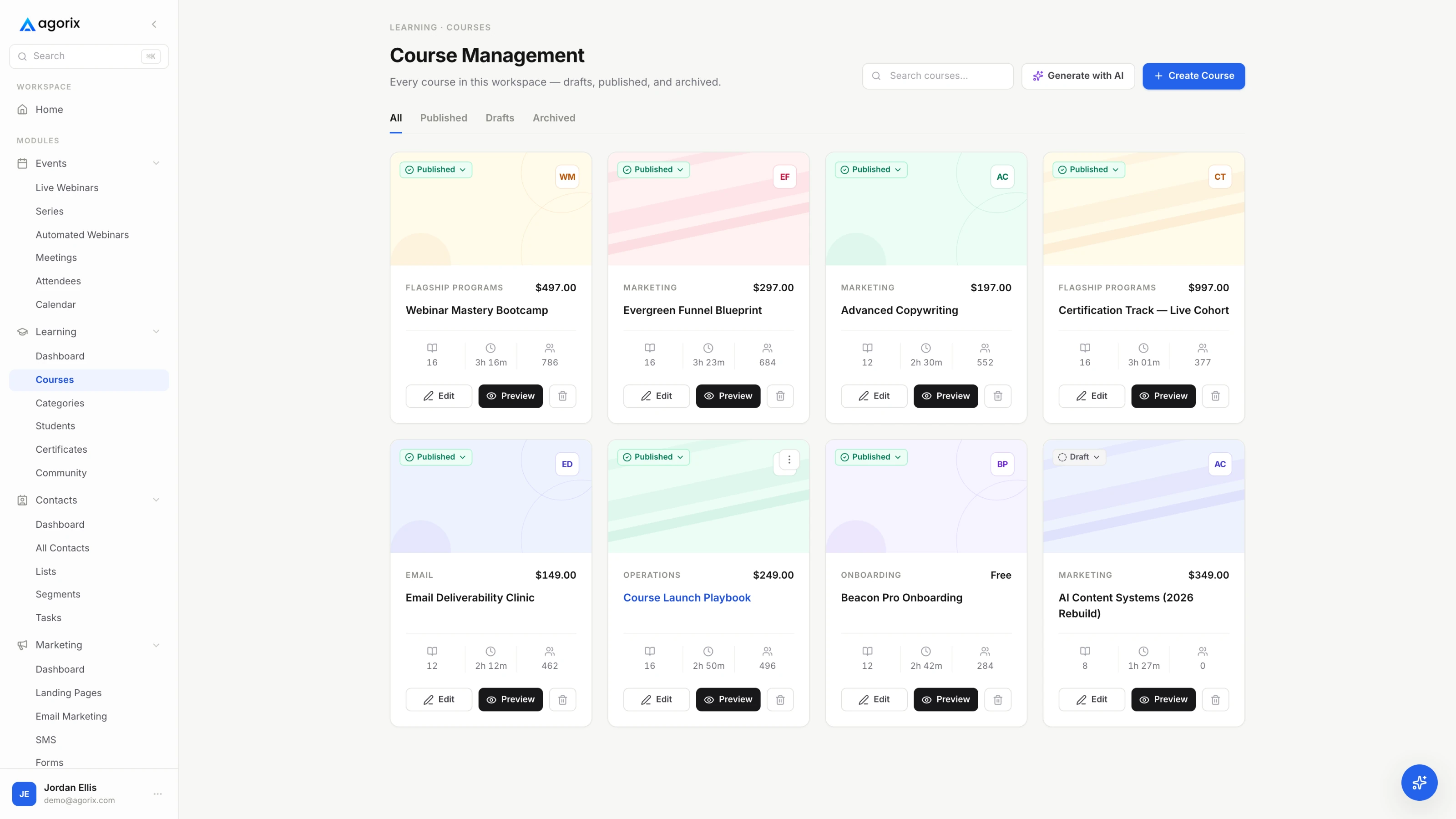
A course structured into modules and lessons, with student progress visible beside it.
Fig. 02The structure exists before the lessons do. Module one fills the first row; the schedule you promised fills the rest.
Where a tool decision changes the plan

You have taken money for something that does not exist. That is now a delivery schedule.

A pre-sale turns one purchase into a commitment that plays out over weeks: access granted before there is anything to access, modules released as they ship, a founding cohort expecting calls, and — if the threshold is missed — an exact list of people to refund. Stitched together that is a checkout in one tool, a course in another and a spreadsheet holding the promise. In Agorix the purchase, the course and the student’s progress sit on one customer record — see how courses work.

Start your 14-day trial 14 days · $0 due today · Payment method required · Cancel before first charge and pay nothing
AfterReading the answer

A pre-sale that fails is the cheapest result available to you.

It cost a sales page and a week. The alternative was finding out the same thing after three months of building, which is the outcome the whole exercise exists to prevent. But “nobody bought” is five different findings wearing the same clothes, and they lead to opposite decisions.

  1. Nobody saw it. A reach problem wearing a demand problem’s clothes, and the first thing to rule out. Before concluding anything about the idea, count how many people actually reached the page. A pre-sale shown to eighty people who half remember who you are has told you very little about the course and quite a lot about your distribution. Fix the reach, then run it again and label it to yourself as a second attempt rather than a second data point.
  2. They saw it and did not care. Traffic arrived, few bought, and the replies were quiet. This is the reading people fear and the one most worth having: you learned in a week what you would otherwise have learned in three months, and you learned it for the price of a sales page. Something in the topic, the audience or the framing is wrong, and the same money spent building would not have fixed any of them.
  3. They cared, and did not believe you would deliver. You can tell this one from the questions: when exactly does module three arrive, what happens if you do not finish, have you done this before. That is a credibility gap, not a demand gap, and more copy will not close it. Build module one, ship it publicly, and reopen with something finished to point at.
  4. They cared, believed you, and could not justify the price. The tell is “is there a payment plan” and “will there be a shorter version”. That is a packaging problem, and it is a good problem — the idea survived, the shape did not. Change the price, the scope or the payment terms, not the subject.
  5. They wanted the adjacent thing. The best outcome dressed as a failure. Nobody bought, but the replies keep naming something next to what you offered — a shorter version, a done-with-you version, the prerequisite you assumed they had. Follow the replies. A pre-sale that fails and hands you the right offer has done its job.

The replies tell you which one it is more reliably than the numbers do, which is another reason to answer every one of them personally during the window. Twelve honest replies from people who did not buy are worth more than a conversion rate calculated on a hundred visitors.

Then take an actual exit

Whichever reading it is, the pre-sale ends — properly, on the date you announced, with every buyer told what is happening to their money. The left-hand column below is what that looks like. The right-hand column is what people do instead when they cannot face the email, and every item in it starts as a delay rather than a decision.

Honest exits

  • Refund everyone in full, quickly, and without waiting to be asked
  • Say why in plain language, and say what you learned
  • Offer the adjacent thing if the replies named one, priced for what it actually is
  • Build it at a smaller scale, having told buyers the scale changed and offered them the exit first
  • Keep the outline and the page — both are worth more now than they were a week ago

Not exits

  • Keeping the money while the course quietly becomes something you will get to
  • Shipping a thinner course than you sold, at the price you sold the thicker one for
  • Moving buyers onto a different product without asking them first
  • Extending the deadline you announced and calling it demand
  • Going quiet, which is the only one on this list your buyers will never forgive
And if it worked

The obligation starts the day the cart closes.

A successful pre-sale is not a finish line, it is a signed contract with dates on it. Send the buyers something within a day — even if the honest content of that message is “here is the schedule, here is where it will live, here is what arrives first and when.” Then build module one, ship it early if you possibly can, and treat every promised date as load-bearing. The people who bought before it existed are the ones who will tell everybody else whether you can be trusted with a pre-sale, and they are deciding that from now.

Common questions

Six questions about preselling.

Is preselling an online course ethical?

Yes — when the buyer knows they are buying something that does not exist yet, knows the date each part arrives, and knows what happens if you do not build it. It stops being ethical the moment a buyer could reasonably believe they were buying a finished course. Disclosed pre-sales are ordinary commerce, the same arrangement as a pre-ordered book or a ticket to a show that has not been staged yet. Undisclosed ones are something else, and the difference between the two is a paragraph on the page.

How much of the course should exist before I presell it?

At minimum an outline detailed enough to describe the scope you are selling — if you cannot list the modules, you cannot honestly sell them, and the curriculum outline is the artifact that makes the promise specific. Many creators go further and build module one before opening the cart. That is the version that makes the delivery dates credible, because you cannot honestly promise a schedule you have never tested.

What price should I charge for a course presale?

Lower than the finished price, for the real reason that the buyer is carrying the risk — not as a favour, and not as a permanent discount you will quietly run again next quarter. Whatever you pick, the later price has to be one you will genuinely charge. A pre-sale measured against a number you never intend to charge is a fake anchor. The course pricing guide works through how to arrive at the finished number first, since the pre-sale price only means something relative to it.

How many buyers do I need to validate a course idea?

A number you set yourself, before you open, derived from your own build cost and your own price. Any threshold you borrowed came from someone else’s audience, price point and cost of building — and a threshold you did not derive is one you will talk yourself out of at buyer six, which is precisely the moment it exists to survive.

What refund policy should a course presale have?

Decide before you open, and write it in words a buyer could quote back to you. A common and defensible posture is a full refund at any point before the first module ships, plus your normal refund window afterwards. One refund is not optional: if you cancel the course, everybody is repaid in full without having to ask for it. Rules on advance payment, delivery and refunds differ by country and by payment processor, and a pre-sale is exactly the situation those rules exist for — confirm yours before the cart opens. The refund policy guide covers the wording.

What if my presale does not hit its threshold?

Then you have your answer for the price of a sales page and a week, rather than the price of a build — which is the entire reason to presell. Refund everyone promptly, tell them plainly what happened, and work out which of the five readings above it was. The replies usually say. A pre-sale you refunded well is worth more to your reputation than a mediocre course you shipped because you felt obliged to.

Keep going

What happens once the answer is yes.

From a validated idea to a delivered course

You have the answer. Agorix is where the promise gets kept.

The sales page, the checkout, the founding-cohort calls, the course modules as they ship, and the student progress that follows — on one customer record, so the people who bought before it existed stay one list rather than four exports.

14 days · $0 due today · Payment method required · Cancel before first charge and pay nothing