Skip to content
Agorix
Updated 29 July 2026

Re-engagement email campaign: win them back, or let them go.

Three emails that ask a cold list an honest question — the check-in, the best-of, and the plain “should I stop emailing you?” with a one-click stay — plus the sunset policy that decides when silence means remove. Complete copy, the reason behind each send, and the pressure tactics to refuse.

03emails
02policy blocks
10min read

What you are taking away

  • Three win-back emails with subject lines, ready to paste into any tool
  • A sunset policy you can copy into your operating docs and actually hold
  • A definition of “cold” that survives the month you have something to sell
  • The re-permission notice for a list whose consent you cannot evidence
  • The pressure tactics to refuse, and why they cost more than they return
  • The cadence reset for the people who click stay
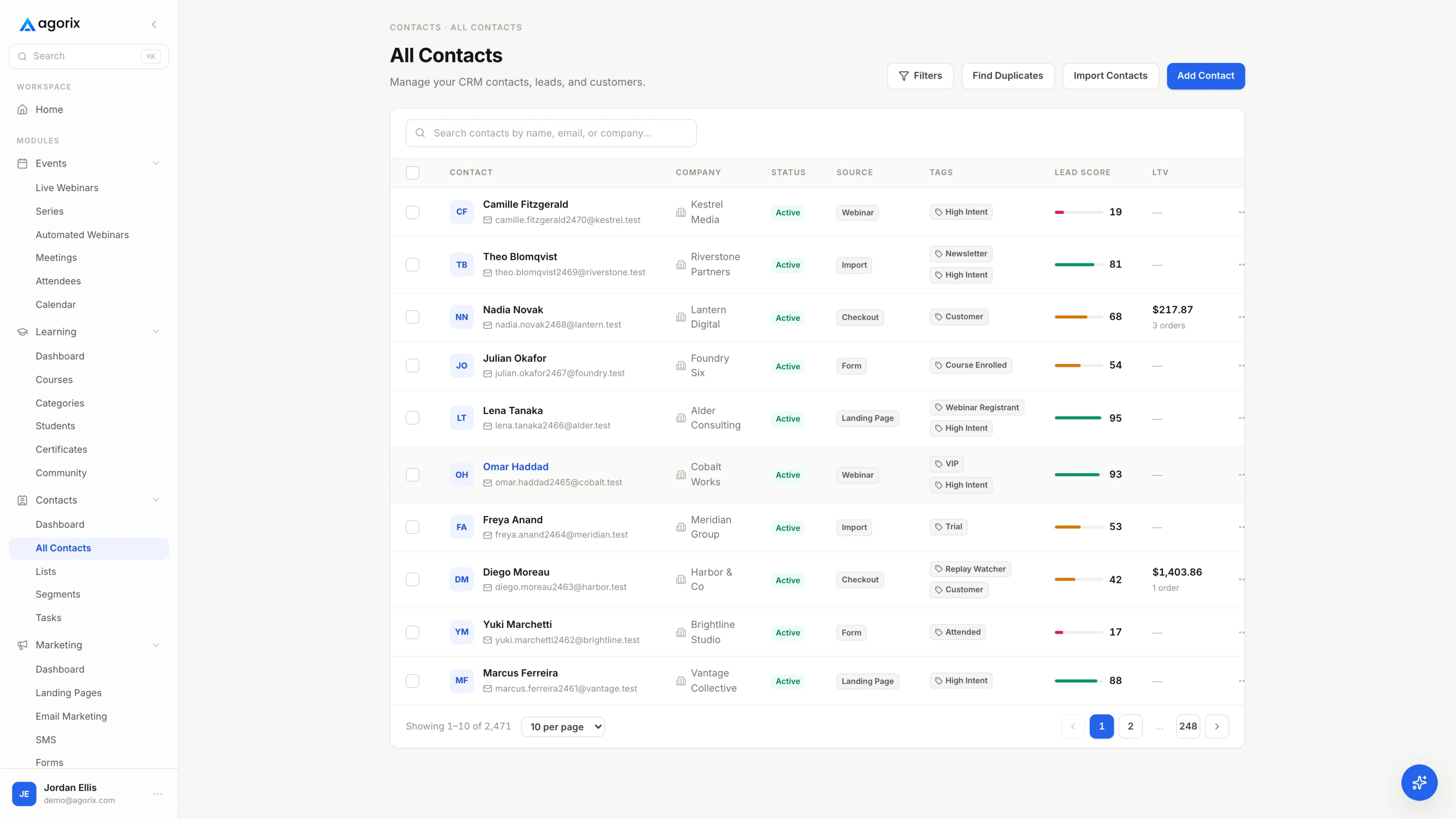
A behavioural audience definition used to build a cold segment.
Before you send anything

The campaign is the segment. The emails are the easy part.

A re-engagement campaign is three emails and one decision, and the decision is worth more than the copy: who counts as cold, and what happens to the people who never answer. Write that down first or the campaign quietly becomes a broadcast to everybody.

What it is for

An honest question, asked once

You are not trying to trick a disengaged person into one more click. You are asking whether they still want this, making it easy to say yes, and making it easy to say nothing — because nothing is also an answer and you have agreed in advance to respect it.

What it is not for

Squeezing a launch out of a list

A win-back run because revenue is down is not a win-back. It is a broadcast to the people least likely to want it, sent at the moment you can least afford the complaints, and it is why the policy below puts the campaign on a schedule.

The brackets are the work

Everything in [brackets] is yours to replace, including every window in the sunset policy. The numbers in it are starting points chosen so the document reads as a document — they are not benchmarks and there is no correct value for a business other than yours. Swap the brackets for your tool’s merge fields where a merge field exists.

The whole campaign

Day counters from the moment somebody enters the cold segment. The two rows at the ends are the ones people skip, and they are the ones that make the middle three work: the segment build before day 0, and the actual removal after day 15.

WhenWhat runs
Before day 0Build the segmentBehavioural definition, exemptions applied, complaints and bounces suppressed.
Day 0The honest check-inNames the silence and offers three answers, including “less often”.
Day 4The best of what they missedArgues by demonstrating. No question, no pressure.
Day 8Should I stop emailing you?A real removal date and a one-click stay. Says what is not affected.
Day 15The sunsetRemoved from active marketing. Record, purchases and access retained.
Day 15 →The cadence resetEveryone who stayed gets a short re-orientation, not the launch in progress.

Three emails and two policy blocks, plain text. Copy them one at a time, or take the whole campaign as a single block and cut it down in your editor.

Day 0 → Day 8The three-email win-backBlock 01 / 02

Ask, demonstrate, then offer the exit.

Three emails, eight days, and each one does something the other two cannot. The first names the silence and offers a middle option that most campaigns leave out. The second argues by being useful. The third asks the question directly and gives a real answer to doing nothing.

Anyone who opens, clicks, replies, registers or buys during those eight days comes out immediately and goes back to the normal cadence. That exit has to be automatic — somebody who replied to the check-in on Tuesday and receives “should I stop emailing you” on Friday has been told, accurately, that nobody read the reply.

Day 0

The honest check-in

01 / 5
SubjectAre these still useful?
Alt[First name], one question
[First name] —

You signed up for [what they actually signed up for] around
[approximately when, if you know it], and you have not opened anything
from me in a while. That is information, so I would rather ask than
guess.

Three ways this usually goes:

1. Still useful, just busy. Nothing to do — I will keep sending.
2. Useful, but too much. Reply with the word “less” and I will move you
   to [the lower-frequency option you genuinely have].
3. Not useful any more. [Unsubscribe link], no hard feelings. It
   genuinely helps me to have an accurate list.

If you tell me what you are working on at the moment, I will point you
at whichever of my [articles, sessions, tools] is closest to it.

[Your name]
Why it is sent then

Opens the campaign by naming the situation rather than pretending nothing happened. The three options matter: most re-engagement emails offer stay or leave, when the real answer for a large share of a cold list is “too often, wrong topic.” Option two only belongs in the email if the lower-frequency option actually exists — if you cannot deliver it, cut the line rather than promise it.

Change it for
  • CoachSend it from your own address, one at a time if the segment is small enough. On a list of a few hundred, this email is a personal note and should read like one.
  • Course creatorSplit students from prospects before this goes out. Asking an active student whether your emails are useful reads as though you cannot see they are enrolled.
  • Digital-product sellerName the product they bought or the freebie they took. A cold contact who owns something from you is a different conversation from one who never bought.
Day 4

The best of what they missed

02 / 5
SubjectThe three most useful things I sent while you were away
AltIn case you missed these
[First name] —

No question in this one. Three things from the last [period] that were
worth the time, in case any of them are relevant now.

1. [Title] — [one line on the problem it solves]
   [Link]

2. [Title] — [one line on the problem it solves]
   [Link]

3. [Title] — [one line on the problem it solves]
   [Link]

That is the whole email. If none of them are useful, that is a fair
answer too and [unsubscribe link] is right there.

[Your name]
Why it is sent then

The only email in the three that argues for staying by demonstrating rather than asking, which is why it sits in the middle. Choose the three by what produced replies, questions and purchases — not by open rate. The segment you are mailing did not open anything, so opens cannot rank content for these people; the things that made your engaged readers respond are the best available proxy.

Change it for
  • CoachPick the three questions clients ask most and answer them in the email itself. Links ask for a click; a cold contact will give you a read before they give you a click.
  • Course creatorOne free lesson beats three article links. It is the closest thing to the experience you are asking them to come back for.
  • Digital-product sellerLead with what changed — a rebuilt template, a new format, a fix people asked for. “Still here” is weaker than “this is different now.”
Day 8

Should I stop emailing you?

03 / 5
SubjectShould I stop emailing you?
AltLast one, unless you tell me otherwise
[First name] —

This is the last email I will send unless you want more.

You have not opened anything from me since [month], so on [date] I am
taking you off my marketing list. Nothing dramatic. It keeps my emails
landing for the people who do read them, and it keeps me from paying to
email an empty room.

If you want to stay, one click and you are back in:

[Stay-subscribed link — one click, no form, no login, no survey]

If you do nothing, you will not hear from me again after [date].

To be clear about what this does not touch: [your purchases, your
course access, your account, your login] are not affected in any way.
This is only about marketing email.

Thanks for the time you did give me.

[Your name]
Why it is sent then

The stop question works for one reason: it is true. The removal date is real, the one-click stay is genuinely one click, and the paragraph naming what is not affected is what separates a legitimate sunset notice from the account-deletion theatre covered further down. Send it, then honour it — a “final email” followed by more email is the fastest way to teach a list that nothing you write means anything.

Change it for
  • CoachOffer a door as well as an exit: “if you would rather just hear when I open coaching spots, reply and I will move you to that list.” Only if that list exists.
  • Course creatorNever send this to a student with active access. Say so explicitly in the email for anyone who has bought before, or the removal reads as losing the course.
  • Digital-product sellerName the receipts. Buyers keep getting purchase and update email regardless of marketing status, and saying that plainly removes the only real reason to click stay out of fear.
Day 15The sunsetBlock 02 / 02

When silence means remove.

The three emails only work because something happens at the end of them. Without a sunset, the stop question is a bluff, the removal date is decoration, and the campaign is one more broadcast to people who stopped reading — which is the exact problem it was supposed to solve.

Why removal is the point

Mailbox providers decide where your mail lands using how the people you send to behave. Continuing to send to a large group who never open, never click and never reply teaches the providers that your mail can safely be ignored, and that judgement is then applied to everybody — including the readers who would have opened. Removing the silent contacts is not a punishment for them. It is protection for the relationship you still have with everyone else. Deliverability basics covers the sending domain, authentication and complaint side of the same problem.

There is a second reason, and it is the one that makes the decision concrete rather than theoretical: an inactive contact is not free. Marketing platforms price on the number of people you can market to, so a third of a list that stopped reading two years ago is a third of a bill paid every month for silence.

Removed from marketing is not deleted

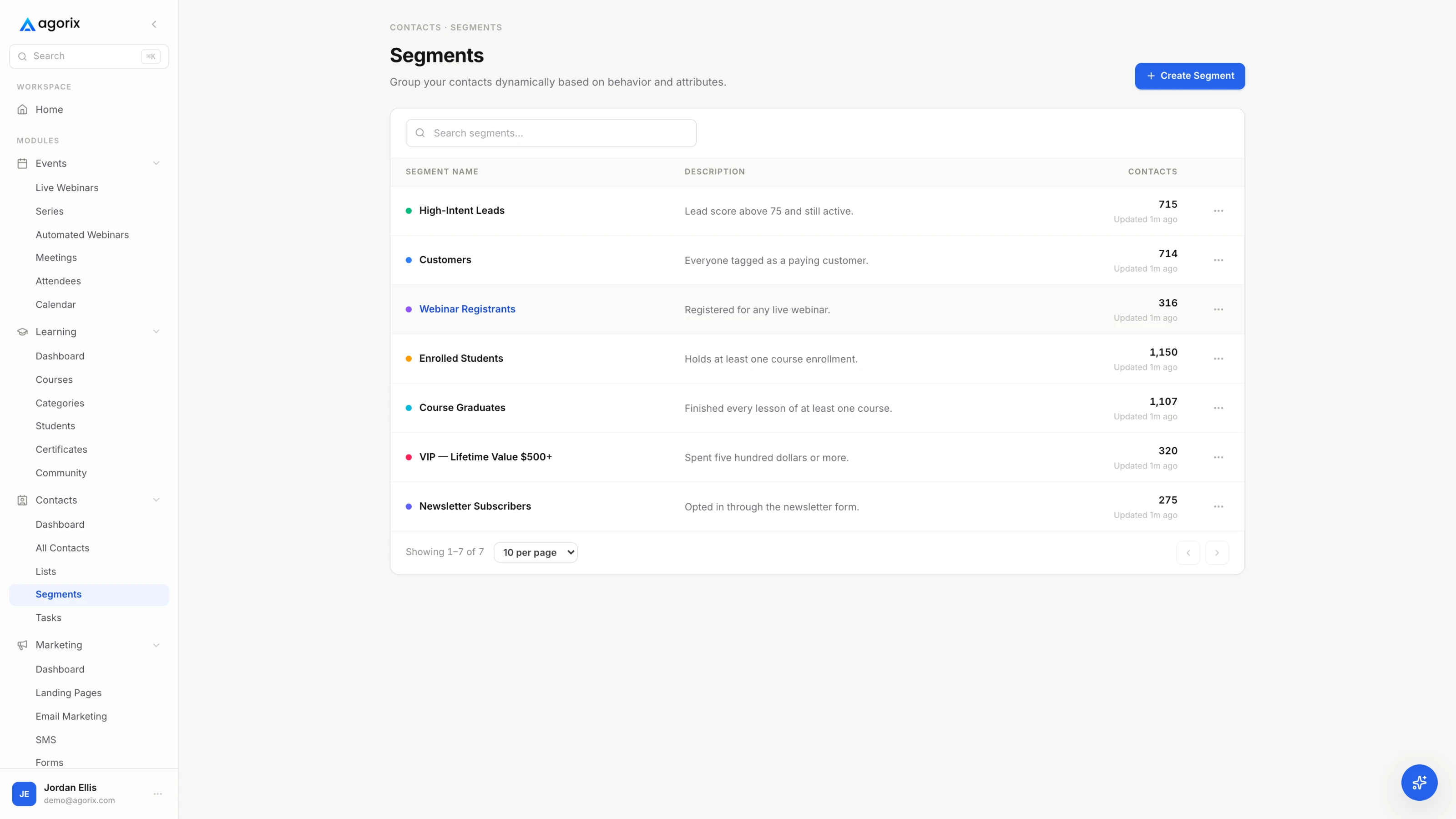
The objection to sunsetting is almost always the same: these are people who bought from us, attended something, sat in a course. The answer is that removing somebody from active marketing does not have to remove them from the business. The customer record, the purchase history, the course access and the receipts all stay. What stops is marketing email — and the policy below says that explicitly so nobody has to relitigate it next quarter.

Policy

The sunset policy

04 / 5
Use itPaste into your marketing operating doc, fill the windows, give it an owner and a review date.
SUNSET POLICY — [Business name]
Owner: [name]   ·   Reviewed: [date]   ·   Next review: [date]

1. WHAT COLD MEANS
A marketing contact is cold when there has been no open, click, reply,
purchase, login, event registration or form submission for [N] days.
[N] must be longer than the longest normal gap between purchases in
this business. Starting points to change, not benchmarks:
   — Audience that buys monthly or subscribes: [90] days
   — Audience that buys a few times a year: [180] days
   — Seasonal, annual or high-ticket audience: [365] days

2. NEVER COLD
Exempt regardless of engagement:
   — Purchased anything in the last [12] months
   — Active subscription, membership or course access
   — Registered for something that has not happened yet
   — [Any other exemption that is true for this business]

3. THE WIN-BACK
A contact that goes cold enters the three-email win-back:
   Day 0  the honest check-in
   Day 4  the best of what they missed
   Day 8  the stop question, with a one-click stay
Any open, click, reply, registration or purchase during those eight
days ends the win-back immediately and returns the contact to the
normal cadence.

4. THE SUNSET
[7] days after the stop question with no response, the contact is
removed from active marketing. Customer history, purchases, course
access and receipts are retained. Only marketing sending stops.

5. PERMANENT SUPPRESSION
Spam complaints and hard bounces are suppressed permanently and are
never entered into a win-back. They are removed ahead of everything
above.

6. RE-ENTRY
A sunset contact returns to active marketing only through a new
deliberate action by that person — a new form submission, a
registration, or a purchase. Not by import, not by list merge, not
because a launch is coming.

7. WHEN THIS RUNS
The win-back runs [monthly / quarterly] on a schedule. It is not run
because revenue is down and it is not run in the two weeks before a
launch.

8. REVIEW
Reviewed [quarterly] by the owner named above. Change the windows if
the data says so. Do not change them for one campaign.
Why it is written down

A sunset rule that lives in somebody’s head is not a policy — it is an intention that gets overruled the first quarter a launch is coming and removing people feels expensive. Written down, with an owner and a review date, it survives that conversation. Clause 7 is the one people delete and the one that matters most: the campaign has to run on a schedule, because a win-back sent the week before a launch is not a win-back.

Change it for
  • CoachLonger windows and more exemptions. On a small list a contact who had one call with you two years ago is not cold in any useful sense, and the capacity argument barely applies.
  • Course creatorStudents are never cold while access is live. Prospects who joined for a free lesson and never returned belong on the shortest window you run.
  • Digital-product sellerExempt anyone who bought in the last twelve months and put the free-tool list on the shortest window. Those two rules do most of the work on a catalogue business.
Where a tool decision changes the plan

Sunsetting is easy to agree to and hard to do when removal means losing the record.

On a stitched stack the marketing list is the customer list, so taking somebody off the list means discarding what they bought and attended — and the policy gets overruled every time. Agorix separates the two: plan limits apply to the contacts you actively market to, while the CRM keeps the history for buyers, attendees and students. Stop the sending, keep the customer — see how marketing works.

Start your 14-day trial 14 days · $0 due today · Payment method required · Cancel before first charge and pay nothing
What to refuse

The pressure tactics, and why they cost more than they return.

Win-back campaigns attract manipulation because the audience is unresponsive and the temptation is to escalate. Every tactic below produces clicks. Each one also produces the thing you cannot afford from this segment, which is complaints.

Do this

  • Define cold behaviourally, in writing, before you draft a word
  • Exempt buyers and active students by rule rather than by memory
  • Suppress complaints and hard bounces permanently, ahead of everything
  • Make the stay one click — no login, no form, no survey
  • Say plainly what is not affected: purchases, access, receipts
  • Send from the same name and domain they originally signed up for
  • Honour the removal date you published, on the day you published
  • Run it on a schedule, not in the week before a launch

Refuse this

  • “Your account will be deleted” on a list where there is no account
  • A final notice followed by three more emails
  • Subject lines dressed as a reply, a receipt or a system message
  • A stay button that lands on a login page or a five-field form
  • Guilt framing — “I guess you do not want to hear from me”
  • Mailing the whole list because building the segment was awkward
  • Re-adding people you sunset because a launch is coming
  • Treating silence during a re-permission campaign as a yes
The line you do not cross

“Your account will be deleted” on a list where there is no account.

It is the most common manipulation in this genre and it is simply a lie: no account exists, nothing is being deleted, and the sentence is there to manufacture a fear response that produces a click. It works in the sense that people click. It also converts a quiet unsubscribe into a spam complaint — the reader who feels tricked does not press unsubscribe, they press the button that reports you — and complaints follow your sending domain around long after the campaign is forgotten.

If there genuinely is an account and it genuinely is being closed, that is a different email: a real product notice, with a real date, sent because it is true. The test is simple. Would you be comfortable if the reader forwarded your email to somebody who could check whether the claim was accurate.

The quieter version

A final email followed by more email.

Less dramatic, more corrosive. Sending “this is the last email you will get from me” and then sending four more teaches your entire list that your words do not describe your actions — including the deadlines on your offers, which is where it eventually costs money. If you publish a removal date, remove people on it.

Re-permission

A different question, for a list you inherited.

A win-back asks “do you still want this,” which quietly assumes you had permission and could show it. Re-permission asks “did you ever agree to this,” and it is the honest question for a list that arrived by import, acquisition, badge scan, or a form nobody remembers building.

The mechanics are the same as the stop question with one difference that decides everything: silence means no. In a win-back, doing nothing removes somebody from a list they once joined. In a re-permission campaign, doing nothing means they never confirmed, and confirming on their behalf is the failure that turns a hygiene project into a complaint problem.

Rules on consent and marketing email differ by where your subscribers live, and they change. Confirm what applies to your list before you send rather than assuming this block covers it — it is written to be honest, not to be legal advice.

Re-permission

The re-permission notice

05 / 5
Use itUse only when you cannot evidence how and when each contact opted in. Paste the block into the top of the campaign.
RE-PERMISSION — [Campaign name]

WHEN THIS APPLIES
Use it when the list was imported from another system, collected for a
different purpose, inherited with a business, or is old enough that you
cannot show when and how each contact opted in. Do not use it as a
routine win-back — that is the three-email sequence, not this.

THE BLOCK, AT THE TOP OF THE EMAIL

    You are getting this because you [the specific thing they did] on
    or around [approximate date]. I am rebuilding my list from scratch
    and only keeping people who say yes.

    Yes, keep sending: [one-click confirm link]

    What you would get: [topic], [frequency, stated exactly].

    Do nothing and this is the last marketing email you receive from
    me.

THE RULES THAT MAKE IT REAL
   — Silence means no. Nobody is confirmed who did not click.
   — Record the confirmation on the contact: date, campaign, link.
   — Say what they will get and how often here, not later.
   — Send it once, or at most twice. A re-permission campaign that
     runs four times is not asking, it is insisting.
   — Re-permission cleans up a weak record. It does not manufacture
     consent that never existed — if there is no lawful basis to email
     these people at all, this campaign is not the fix.
   — Confirm the rules that apply in the places your subscribers
     actually live before you send. They are not the same everywhere.
Why it is written down

Re-permission answers a different question from a win-back. A win-back asks “do you still want this,” which assumes you had permission and can prove it. Re-permission asks “did you ever agree to this,” which is the honest question for an inherited or imported list. Treating silence as a yes is the failure mode, and it is the one that turns a list-hygiene project into a complaint problem.

Change it for
  • CoachIf the list came from a conference badge scan or an event export, say so in the first line. Naming the room you met in is more credible than any subject line you could write.
  • Course creatorKeep transactional and course-access email out of the campaign entirely. Confirming marketing permission is not the same as revoking access to something already bought.
  • Digital-product sellerIf the list came with an acquired product or business, say that plainly. People are more willing to confirm when they understand why a stranger has their address.
Day 15 →The cadence reset

The people who stayed need a different first month.

Somebody who clicked the stay link has done one thing: agreed to keep hearing from you. Treating that as recovered demand — and dropping them straight back into whatever the list is currently receiving — undoes the campaign in a fortnight.

  1. Reset the engagement date first. A click on the stay link is engagement, today. If your cold rule still reads from the last open, everyone you just won back is cold again next month and gets the whole campaign a second time.
  2. Do not drop them into the launch in progress. Somebody who has just agreed to keep hearing from you is a re-permissioned stranger, not a warm buyer. Landing them mid-launch is how a win-back turns into a complaint.
  3. Send a short re-orientation. Two or three emails: what you cover now, how often, and one genuinely useful thing. It is an abbreviated welcome sequence, and it works for the same reason the original one does.
  4. Honour “less” if you offered it. Anyone who replied to the check-in asking for less has to actually receive less. An offer of lower frequency that changes nothing is worse than never offering it, because it was answered.
  5. Watch the second cold. Somebody who goes cold again within [N] months has answered the question. Sunset them on the next cycle without a second full win-back — you have already asked twice.
  6. Read the result as a frequency signal, not a scoreboard. If a large share of the segment asks for less rather than leaving, the campaign found a cadence problem rather than a content problem, and the fix is upstream of the win-back.
Contact records retaining history while marketing status changes.
Fig. 01Two different states on one record: what the business knows about a person, and whether that person is currently being marketed to. Sunsetting changes the second and leaves the first alone.

The most useful thing a win-back produces is rarely the reactivated contacts. It is the answer to why they went quiet — and if the replies say “too often,” the campaign has found a cadence problem that no amount of win-back copy will fix. Email frequency and the newsletter system are where that fix lives.

Mechanics

Eight settings that decide whether this helps or hurts.

This is the riskiest campaign on your calendar: it goes to your least engaged addresses, all at once, on purpose. The copy matters less than the list you send it to and the pace you send it at.

  1. Build the segment before you write. The definition is the campaign. Everything downstream — who gets the check-in, who is exempt, who is sunset on day 15 — is decided by a rule you either wrote down or improvised, and improvised rules always exempt whoever is currently convenient.
  2. Do not define cold by opens alone. Privacy features in some mail clients pre-fetch images, which can register an open nobody made, and image blocking elsewhere hides opens that did happen. Use clicks, replies, purchases, registrations and logins alongside opens so the segment is built on actions people actually took.
  3. Remove complaints and hard bounces first. They come off permanently and never enter a win-back. Mailing an address that already complained is the single most damaging send available to you, and it is entirely avoidable.
  4. Send in batches and watch the first one. The least engaged people on your list are the riskiest audience you will ever mail. Send a slice, wait, look at complaints and bounces, and continue only if it is clean. Do not put the whole cold segment in one blast on a Monday morning.
  5. Same from-name, same sending domain. A cold contact recognises the name they subscribed to and nothing else. A fresh domain or a new sender identity turns a win-back into an unrecognised message from a stranger, which is the definition of the mail you are trying not to send.
  6. Plain, and one link. These three emails are conversations. A designed template with a header image and six links reads as a broadcast, and the whole premise of the campaign is that it is not one.
  7. The one-click stay must be one click. A link that sets a flag and shows a confirmation page. Not a login, not a preference centre with eleven checkboxes. Every step you add between the intention and the record is a person you lose for no reason.
  8. Test the removal path, not just the emails. Run yourself through the whole thing on a test address: go cold, receive all three, click stay, confirm the flag lands. Then do it again without clicking, and confirm the sunset actually fires on the date you promised.
If you do one thing

Write the definition of cold, then hold it.

Everything else on this page is downstream of that sentence. A business with a written cold rule and no templates will run a better campaign than one with perfect copy and a segment assembled the morning it sends, because the second one always ends up mailing everybody.

Common questions

Six questions about winning a list back.

How many emails should a re-engagement campaign have?

Three: the honest check-in, a best-of that argues by demonstrating rather than asking, and a plain stop question with a one-click stay. Longer sequences do not persuade a cold contact — they simply take longer to arrive at the removal, which is the actual point of the campaign. If somebody has ignored eight emails, the ninth is not the one.

When is a contact actually cold?

When there has been no open, click, reply, purchase, login, registration or form submission for a period longer than the longest normal gap between purchases in your business. Ninety days can be right for a monthly-purchase audience and badly wrong for one that buys once a year. Write the window down, apply it by rule rather than by feel, and exempt recent buyers and active students explicitly — the lead scoring guide covers building the behavioural definition on a small list.

Should I really remove people who never respond?

Remove them from marketing sending, not from your records. Continuing to mail people who never engage teaches mailbox providers that your mail can safely be ignored, and that judgement is applied to the people who do read you. Deliverability basics covers the mechanics. The customer record, the purchase history and any course or account access stay exactly where they are — sunsetting is a sending decision, not a deletion.

Can I tell people their account will be deleted?

Only if it is true and it is actually happening. On a marketing list where nothing is being deleted, that line is a lie told to produce a click. It converts a quiet unsubscribe into a spam complaint, and complaints follow your sending domain around for a long time afterwards. Say what you are really doing — removing them from marketing email on a stated date — and say plainly what is not affected.

Does a re-engagement campaign help deliverability?

The removal helps. The sending is the risk. This campaign goes to your least engaged addresses, which makes it the most dangerous send on your calendar: suppress complaints and hard bounces before you start, send in batches, and look at the first slice before you continue. A win-back that damages your domain has cost you more than the contacts it saved.

What do I do with people who click stay?

Reset their engagement date first, so they are not marked cold again next month by an accounting error. Then send a short re-orientation — what you cover now, how often, and one genuinely useful thing — before anything else. It is an abbreviated welcome sequence, and it works for the same reason. Do not land them in the middle of a launch: they have agreed to hear from you, not to buy from you.

Keep going

What causes a cold list, and what fixes it upstream.

Stop the sending. Keep the customer.

You have the campaign. Agorix is the system that runs it.

Audiences that build the cold segment from real behaviour, a win-back that exits the moment somebody replies, and a sunset that stops marketing to someone without discarding what they bought, attended or completed.

14 days · $0 due today · Payment method required · Cancel before first charge and pay nothing