Refund policies and guarantees: design the risk you can afford to carry.
A guarantee is offer copy, not legal boilerplate. It moves a risk from the buyer to you, which makes the design question a question about what you can absorb. Three shapes with their trades stated, five copyable policy blocks in plain language, and the playbook for the day a request arrives.
03shapes
5policy blocks
07playbook steps
What you will have at the end
A clear statement of what a guarantee actually does, and what it costs
The arithmetic that tells you which guarantee you can afford
Three guarantee shapes, with the trade each one makes stated plainly
Five copyable policy blocks in plain language, with placeholders to fill
A refund-request playbook that is fast, graceful and collects the data
The cases where a strict policy is the honest choice, and how to say so
The one line that protects the brand, and what to do about serial refunders
Step 00What it does
A guarantee transfers a risk. That is the whole mechanism.
Not a marketing flourish and not a legal formality. At the moment of buying, the customer is carrying a risk they cannot evaluate — whether this works for someone like them. A guarantee moves that risk to the side of the table better equipped to hold it.
Which is why guarantees matter most exactly where proof is thinnest. A business with years of results and a wall of specifics needs one least; a first product with nothing to point at needs one most, because it is the only instrument available for answering “what if this is not for me” before there is anybody to quote.
Treat it as offer copy. It belongs on the sales page in the buyer’s language, next to the price and in the same size type — not linked in a footer as a policy document written for a dispute that has not happened. A guarantee nobody reads before buying does none of the work it exists to do and all of the work it costs.
What it does not do
→It does not rescue a weak promise. If the buyer does not want the outcome, removing the risk of paying for it changes nothing. Guarantees convert doubt into purchases; they do not convert indifference.
→It does not substitute for the product working. A generous guarantee on a product that disappoints produces a high refund rate and a reputation, in that order. The policy is the last line of defence, not the strategy.
→It does not have to be unconditional to be effective. The best guarantee is the strongest one you can honour cheerfully every time. A confident conditional beats a generous promise administered reluctantly.
Ch. 01What you can affordThe arithmetic
Design the guarantee against the cost of honouring it.
A guarantee pays when the purchases it causes are worth more than the refunds it causes. Both halves of that sentence are things you can only learn by running it — but the structure tells you what to watch.
Illustrative arithmetic
Every number below is invented. Replace all of them.
A [$200] product, sold to the same audience twice: once with no guarantee and once with a [30]-day unconditional one. The assumption is that the guarantee adds [15%] more purchases and raises the refund rate from [2%] to [10%]. Those two assumptions are the entire result, which is precisely why they are written down rather than hidden inside a conclusion.
Illustrative figure
No guarantee
[30]-day guarantee
Purchases
100
115
Gross revenue
$20,000
$23,000
Refund rate assumed
2%
10%
Refunds paid
2 orders — $400
12 orders — $2,300
Net revenue
$19,600
$20,700
Refunded buyers to serve
2
12
On these assumptions the guarantee is worth about eleven hundred more in net revenue and ten more refunds to process. Change the assumed lift to [5%] and it stops paying; change the refund rate to [20%] and it becomes expensive. The point is not the answer — it is that the answer is entirely controlled by two numbers you should be measuring rather than assuming, and a straightforward test is how you get them.
What a refund actually costs
→The revenue, obviously. And it is usually revenue you have already treated as yours, which is why an unexpected cluster of refunds hurts more than the same amount never earned.
→The processing fee, which may not come back. Some processors return the fee on a refund and some do not. Check yours before you write the policy, because on small-ticket products this is the difference between a refund being neutral and a refund being a loss.
→The support time, which does not scale with price. Reading the request, processing it, removing access and replying takes roughly the same time whether the order was thirty currency units or three thousand. On a low price, the labour is the cost.
→Any commission already paid. If an affiliate or partner has been paid on the sale, decide in advance whether that is clawed back and say so in the partner terms — not after the first one happens.
→Delivery you cannot take back. A live seat, a call you gave, an hour of review. This is the cost that makes strict policies honest for some products and is the single strongest argument for a completion condition on others.
→The alternative, which is worse. A customer who cannot get a refund can usually get their bank to take one. That route costs you the money, plus a fee, plus a ratio you do not want to explain to a processor later. Refunding should always be easier than disputing.
Add those up for your own product and you arrive at the real question, which is not “what refund rate is acceptable” but “at what refund rate does this become a business I do not want to run”. That number is the constraint the guarantee has to be designed inside.
Ch. 02Three shapesTwo dials
A guarantee has two dials: how long, and what they have to have done.
Every guarantee you have ever read is a setting of those two. Three settings are worth naming, because they behave differently as copy and differently as an obligation.
Time-boxed, no questions
A stated window — commonly thirty days — in which anybody can ask for their money back without giving a reason. The default shape, and the one most buyers are picturing when they look for a guarantee.
It is the strongest objection remover of the three because it asks nothing of the buyer at the moment they are deciding, which is exactly when asking for anything is expensive.
The trade: the highest refund rate of the three, and a small number of people who take the product and the money. Choose it when the product is finished, self-serve, and costs you nothing to deliver again.
Completion-conditioned
A refund available to people who did stated work and still did not get the result — completed modules, submitted exercises, attended the sessions. The condition has to be objectively checkable, or it becomes an argument.
It reframes the guarantee from “risk-free” to “we will back you if you back yourself”, which is a different and sometimes stronger promise.
The trade: weaker as copy, because a buyer has to evaluate a condition while deciding. Choose it when the result genuinely requires the work, and only when “completed” means something you can point at.
Unconditional, no window
Any time, for any reason, for as long as the product exists. Rare, memorable, and a genuine statement of confidence that no amount of copy can imitate.
It also removes the deadline pressure that makes time-boxed guarantees quietly convenient for you, which is part of why it lands.
The trade: uncapped liability, and revenue you can never fully count as yours. Choose it only where delivery costs you nothing per buyer and you could absorb a bad month of requests without changing anything.
Setting the window honestly
The right window is the time it takes a reasonable buyer to reach the first real result, plus a margin for a normal life happening in between. Thirty days is the common default because it clears that bar for most products, not because thirty is a magic number. Time your own first result and set the window from that.
Windows shorter than the product needs read as a trick, and buyers detect the mismatch immediately — a seven-day guarantee on a twelve-week program is an announcement that the guarantee is decorative. Much longer windows mostly collect requests from people who never started, which is a real problem with a real fix and the fix is not in the policy.
The combination that works
Short and unconditional first.
A [7]-day no-questions window followed by completion terms gives the buyer an immediate exit if the product is not what they thought, and gives you a fair condition for the rest. Both halves are honest, and the first one is the one that sells.
The combination that does not
Long window, vague condition.
A ninety-day guarantee that requires “demonstrating you applied the material” is a promise that reads generous and administers badly. It invites a dispute about the meaning of a word, three months after the sale.
Ch. 03Writing the policy5 blocks
Write it the way you would say it.
Policy language that sounds like a contract signals that you expect a fight. Plain sentences, second person, and every number stated — how long, how many days to process, what happens to access.
Five blocks follow. They are drafts to copy and fill in, not finished documents: everything in [brackets] is yours to replace, and the note at the end of this guide about checking the result against the rules where you sell applies to all of them.
Five blocks, plain text, brackets to fill. Three guarantee shapes, one for subscriptions, and the reply you send when a request arrives. Copy the one that matches what you sell.
0 / 5 copied
Shape 01
Time-boxed, no questions asked
01 / 5
Use itFinished, self-serve products with low delivery cost
[Product name] comes with a [30]-day money-back guarantee.

If you decide it is not for you, email [support@example.com]
within [30] days of your purchase and ask for a refund. You do
not need to give a reason.

We process refunds within [5] business days and email you when
it is done. The money returns to the card or account you paid
with, and your bank may take a few more days to show it.

When the refund is processed, your access to [product name]
ends.
Why it reads well
It asks nothing of the buyer at the moment they are deciding. Every condition you add is a sentence somebody has to evaluate under uncertainty, which is exactly the state a guarantee exists to relieve.
Change it for
Live sessionsAdd: “Recordings of sessions you attended stay with you.” — or state clearly that they do not.
BundlesSay whether the refund is all-or-nothing, and whether bonuses have to be returned or deleted.
Low priceConsider dropping the email step entirely and refunding on any request, however it arrives.
Shape 02
Completion-conditioned
02 / 5
Use itPrograms where the result genuinely requires the work
[Program name] comes with a [30]-day guarantee for people
who do the work.

If you complete [modules 1 to 3 / the first four exercises] and
[the stated outcome] has not happened for you, email
[support@example.com] within [30] days with your completed
[worksheets / assignments] attached. We will refund you in full
within [5] business days.

We ask for the work because [the program only produces the
result if it is actually run]. If you have not started and
something is in the way, tell us anyway — we would rather help
you start than keep money you are unhappy about.
Why it reads well
It reframes the promise from risk-free to reciprocal, and it is honest about a product whose result depends on the buyer showing up. The last paragraph is the important one: it stops the condition reading as a trap.
Change it for
CheckabilityOnly name conditions you can verify without an argument. “Engaged with the material” is not one.
CohortsUse attendance rather than submissions, and state the number of sessions.
SofteningPair it with a short unconditional window — “no questions for the first [7] days, then the completion terms apply”.
Shape 03
Strict, stated up front
03 / 5
Use itCapped cohorts, live services, committed costs
[Program name] does not offer refunds after
[the enrollment deadline / the first session].

Your place is reserved when you enroll, and we cap the group at
[number] so that [the reason — live feedback, small-group time,
individual review]. That place cannot be resold once we begin.

Before [the deadline] you can cancel for a full refund, no
reason required, by emailing [support@example.com].

After [the deadline] you can [transfer your place to the next
cohort once] or [send a colleague in your place]. If something
serious has happened, write to [support@example.com] — a person
reads it and we will do what is reasonable.
Why it reads well
A strict policy is defensible when there is a real cost behind it and you explain that cost. It is indefensible when it appears in a footer after the sale. Say it beside the price, in the same size type.
Change it for
PlacementRepeat it on the sales page, at checkout, and in the confirmation email. Three places, same words.
EventsTie the deadline to the date your own costs become non-recoverable, and say that is why.
GoodwillKeep the last paragraph. A stated human exception costs almost nothing and prevents most disputes.
Recurring
Subscription periods
04 / 5
Use itAnything billed monthly or annually
You can cancel [subscription name] at any time from
[your account settings]. Cancelling stops all future charges.

We do not refund periods that have already been delivered. You
keep access until [the end of the period you have paid for],
and nothing is charged after that.

If you were charged after cancelling, or you were charged for a
period you could not use because [something on our side went
wrong], email [support@example.com] and we will refund it.

Annual plans: within [14] days of a renewal, email
[support@example.com] and we will refund the renewal in full
and end access at [the original renewal date].
Why it reads well
Recurring products need two separate answers — one about cancelling and one about refunding — and most policies only write the first. The annual clause matters most: an unexpected annual renewal is the single most common cause of a payment dispute.
Change it for
Annual renewalsSend a written reminder [7] days before an annual renewal. It costs a few refunds and prevents disputes.
PausingIf you offer a pause, put it in this policy rather than only in the cancel flow.
GrandfatheringIf prices change, state here that existing subscribers keep their rate or get a full cycle of notice.
Reply
The refund reply
05 / 5
Use itSent within one business day, every time
Hi [Name],

Refunded. [Amount] is on its way back to the card ending
[digits] — depending on your bank it usually lands within
[5 to 10] days, and you will see it as [how it appears on the
statement].

Your access to [product name] ends [today / on date], and I
have taken you off the [product name] emails.

One optional question, and a one-line answer is plenty: what
were you hoping [product name] would do that it did not? It
genuinely changes what we build next.

Thanks for giving it a look.

[Your name]
Why it reads well
The approval is the first word. The confirmation details remove the week of uncertainty between the refund and the statement. The question comes last and is explicitly optional, which is the only version that gets honest answers.
Change it for
Partial refundsState exactly what is being refunded and what is not, and why, in one sentence each.
Declined requestsIf you are declining under a strict policy, quote the policy, offer the alternative you have, and keep it short.
ToneDo not apologise more than once. Repeated apology reads as reluctance rather than as grace.
Four sentences every policy needs
01How long the buyer has, stated as a number of days from a named event. “From your purchase” and “from the start of the program” are different dates, and the difference matters most in exactly the cases where somebody is upset.
02What they have to do to ask. One channel, named. Any request that reaches you counts, but naming a channel stops people wondering whether they asked in the right place.
03How long processing takes, and how the money returns. Refunds arrive on a statement days after they are processed. Saying so in advance prevents the second email, which is always more anxious than the first.
04What happens to access, and when. The single most-omitted sentence in refund policies, and the one that turns a resolved refund into an unresolved question a fortnight later.
Ch. 04When one arrivesSeven steps
Fast, graceful, and collecting the data.
A refund request is a customer interaction with an unusually long memory attached. It is also the single most honest piece of feedback available about the product, and almost everybody throws it away by handling the money and nothing else.
01Reply within one business day. Speed is most of the experience. A refund granted in four hours and a refund granted in nine days are the same money and completely different memories, and only one of them produces a person who still speaks well of you.
02Say yes before you say anything else. The first line of the reply is the approval. Anything placed in front of it — a question, a suggestion, an offer — reads as an obstacle, however warmly it is written, because the reader is scanning for whether they have a fight on their hands.
03Process it, then confirm in writing. The confirmation states the amount, where it is going, roughly when it will land, and what happens to their access. Refunds take days to appear on a statement; without that sentence, the silence in between is filled by the customer with suspicion.
04Remove access cleanly, and stop the sequences. The access ends, and so does every campaign that assumed a purchase. Nothing undoes a good refund faster than an upsell arriving two days later, or a lesson-three reminder for a course they no longer have.
05Ask one optional question, after the money has moved. “What were you hoping this would do that it did not?” One line, explicitly optional, never a required field. People who have already been refunded answer honestly, and their answers are the most valuable feedback the product will ever get.
06Log it in a way you can read fifty at a time. Date, product, price, days since purchase, how far they got, and the reason in their own words. Individually these mean nothing. In a batch they point at a specific fixable thing more reliably than any survey.
07Offer an alternative once, or not at all. One honest option — a swap for another product, a pause, a different tier — offered after the approval, never as a condition of it. If the answer is no, process the refund and thank them. A second attempt turns a customer into an opponent.
Run in that order, the whole thing takes a few minutes and ends with a person who is not angry, an accurate log entry, and a reason written in the customer’s own words. Run in any other order — question first, offer first, delay first — and it ends with the same refund and a worse story.
Who should handle it
Whoever can approve it without asking anybody.
A refund that needs escalation is a refund that takes three days. If someone other than you answers support, give them a standing authority to refund up to a stated amount without checking — the occasional wrong call costs far less than the delay on every right one.
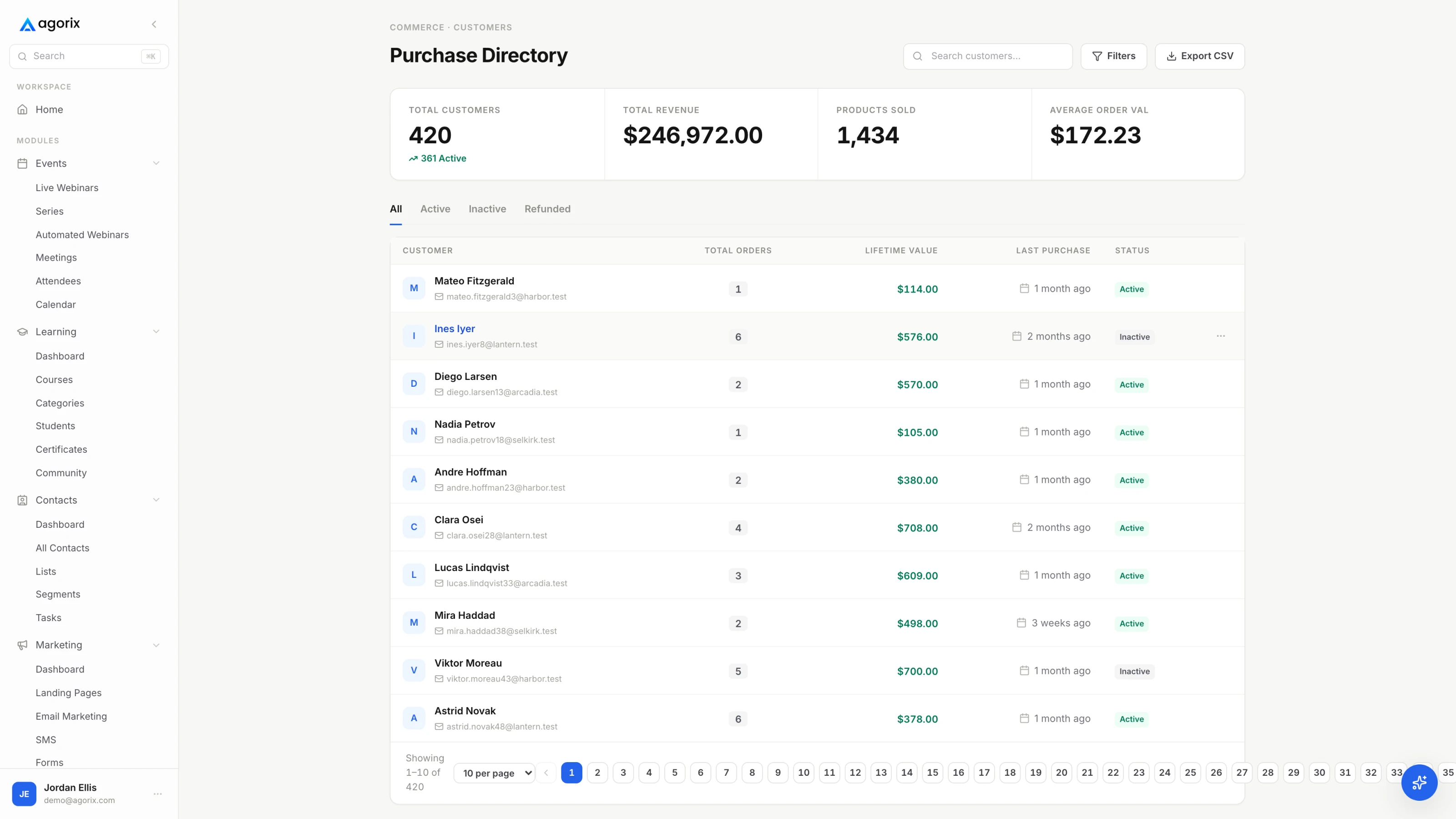
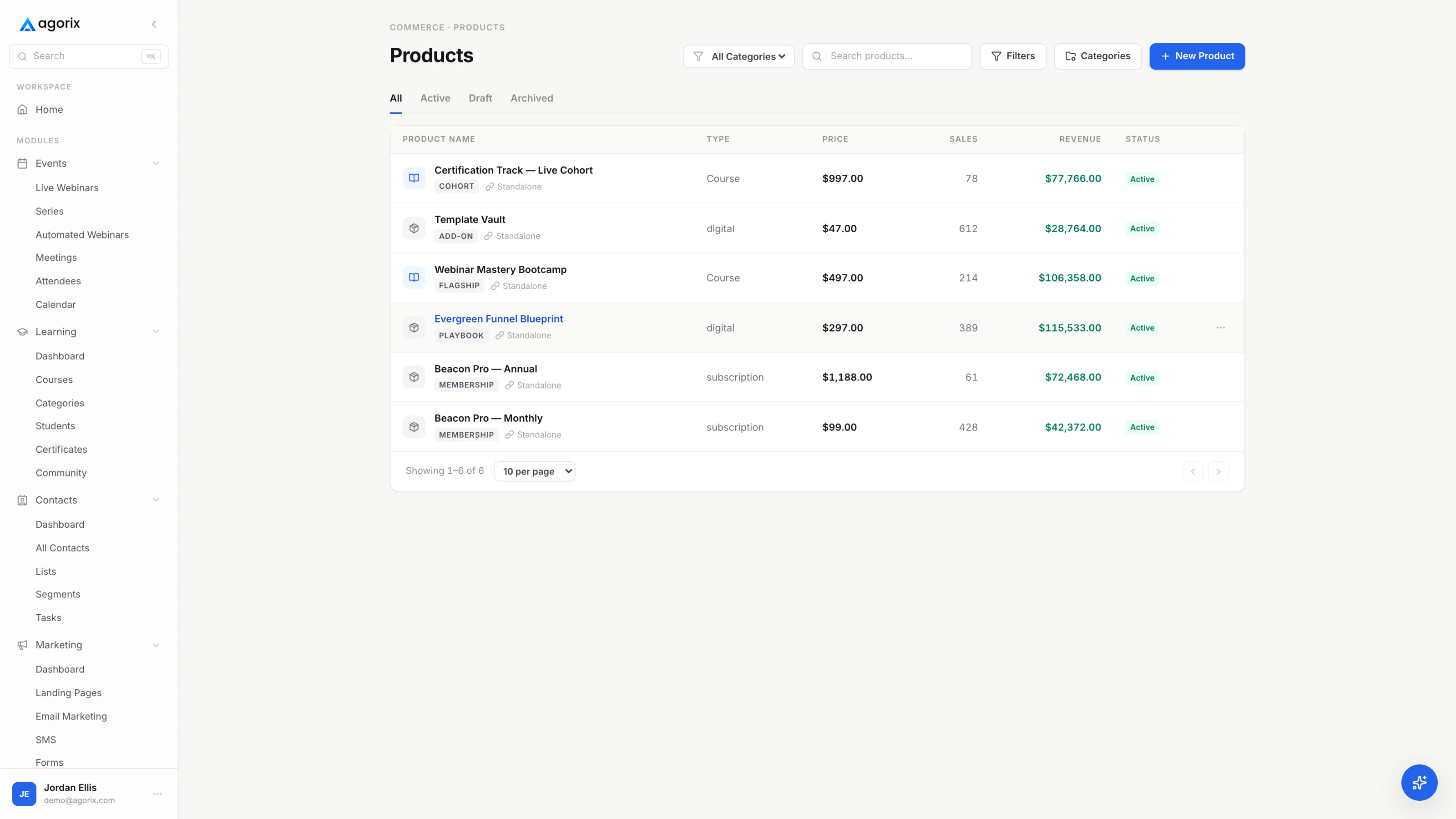
Fig. 01Refunds belong beside the checkout they came from. Rate per product tells you something; rate per checkout page tells you which argument is overselling.
Where a tool decision changes the plan
A refund is a customer-record event, not only a billing one.
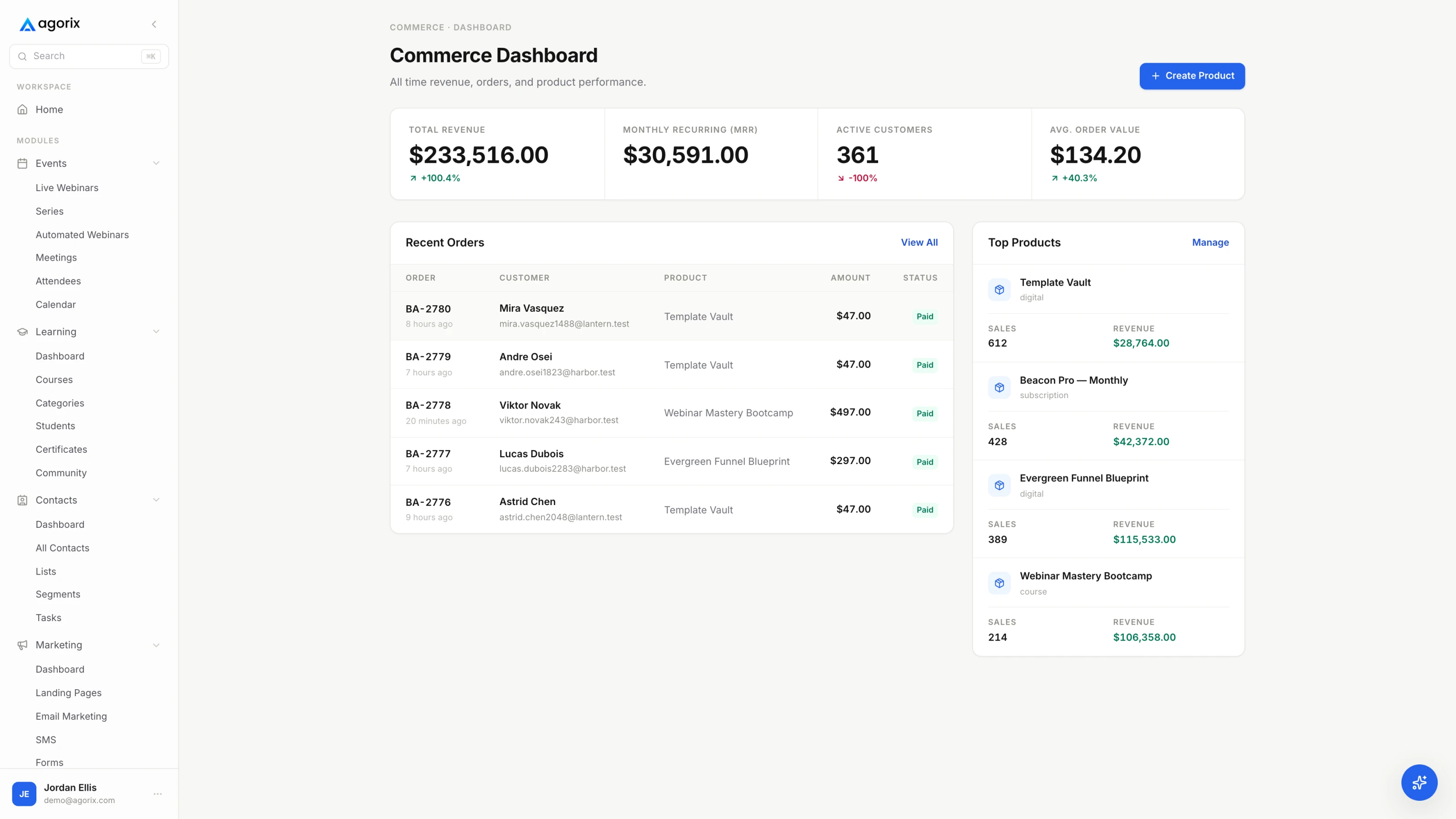
Three things have to change together: the money, the access it granted, and the campaigns the buyer is still in. In Agorix the order, the course or product access and the customer’s campaign history sit on one shared record, so those three are in one place rather than in three systems reconciled by hand. Commerce connects to Stripe for payment processing — see how commerce works.
Start your 14-day trial →14 days · $0 due today · Payment method required · Cancel before first charge and pay nothing
Ch. 05When strict is honestFour cases
Some products should not have a generous guarantee. Say so at the front.
A strict policy is not automatically a mean one. Where there is a real, non-recoverable cost behind the sale, refusing refunds after a stated point is the accurate description of what you are selling — and buyers accept it readily when the reason is given.
01A live cohort with capped seats. You turned away another buyer to hold that seat, and it cannot be resold once the group starts. That is a real cost, and a policy that reflects it is honest — provided the cap is real and the deadline is stated at the point of purchase.
02Anything where you perform the work. A call you gave, a review you wrote, a done-with-you engagement. The delivery cannot be returned. Refund the part not yet delivered and say so precisely rather than pretending the whole thing is reversible.
03Events with a fixed date and committed costs. Rooms, speakers, catering, licences booked against a headcount. A refund window that closes when your own costs become non-recoverable is defensible, and readers understand it immediately when you explain why.
04Products where consumption is instant and complete. A single document, a dataset, a template that is fully useful within ten minutes. A thirty-day window here is functionally a free trial, and it is reasonable to say so and offer something else instead — a sample, a preview, a smaller first purchase.
The two conditions that make strict acceptable
First, the reason has to be real and stated. “Places are capped at twelve because everyone gets their work reviewed live” is a reason. “All sales are final” is a refusal wearing a policy’s clothes, and it reads exactly like what it is.
Second, it has to be visible before the purchase, in the same place as the price. A strict policy discovered in a footer after paying produces disputes regardless of how defensible the terms are, because the grievance is about the discovery rather than about the terms.
Give something instead
A strict policy removes the risk transfer, so replace it with something. A no-questions window before the deadline. A transfer to the next cohort. A named alternative for the person who cannot make it. A smaller first purchase that lets somebody find out whether they like how you teach before committing to the capped thing. Each of these carries part of the objection a guarantee would have carried, and none of them costs you a seat.
The exception clause
Keep one human sentence in every strict policy.
“If something serious has happened, write to us and a person will read it.” It costs almost nothing, it prevents most of the disputes a strict policy would otherwise generate, and it is true — because you would do it anyway.
Ch. 06The lineOne rule
Never make refunds hard in order to punish the honest.
Every friction added to a refund path is justified by a small number of people acting in bad faith and paid for by everybody else. That trade is almost always bad, and it is bad in a way that does not show up in any report you keep.
The arithmetic is unkind. Somebody determined to take the product and the money will get past a form, a required reason, a mandatory call and a three-step cancellation flow — that is what determination means. The person the friction actually stops is the mild one who decides it is not worth the hassle, resents it, keeps the resentment, and mentions it the next time your name comes up. You have retained their money and lost the thing that was worth more.
There is a version of this that is not about ethics at all. Refund friction converts refunds into chargebacks, and a chargeback costs the amount, plus a fee, plus a ratio that eventually becomes a conversation with your payment processor. Making refunds easy is the cheapest form of dispute prevention available.
The rule, written out
Design the refund path for the honest majority. Handle the rest individually.
A policy is a system and it should be built for the people who will mostly use it. Bad faith is rare enough to be handled case by case, and handling it case by case is both cheaper and more accurate than making everybody pass a test designed for somebody else.
Which does not mean unlimited
→Keep a log across products. The same email address refunding a third product is a pattern rather than a coincidence. You cannot see it without the log, which is one more reason to keep one.
→State the repeat rule in advance. “We refund any first purchase without question. If you have been refunded before, we may decline.” One sentence, in the policy, applied consistently and never invented after the fact.
→Decline quietly and without argument. Quote the policy, keep it to three sentences, offer whatever alternative you have, and stop. Nobody has ever improved their position by winning a refund argument in writing.
→Never discuss an individual in public. Whatever the provocation. A public reply about a specific customer is read by everybody who has not bought yet, and they do not read it as vindication — they read it as what you would say about them.
Ch. 07What the log tells youFive patterns
Fifty refunds read together say what fifty surveys will not.
Refunders have nothing left to be polite about, which makes their reasons the most accurate description of the product you will ever be given. The value is in the batch, which means the value depends entirely on having recorded them.
Six fields per refund: the date, the product, the amount, how many days after purchase, how far into the product they got, and the reason in their own words rather than in your categories. That last one is the field that does the work, and it is the one people replace with a dropdown.
01Refunds cluster in the first forty-eight hours. The page and the product disagree at first contact. Somebody bought one thing and opened another. This is a sales-page problem almost every time, and it is the cheapest kind to fix.
02Refunds cluster at the end of the window. People are deciding at the deadline, which usually means they never started. The fix is in onboarding rather than in the policy — a shorter window would only move the same requests forward.
03Refunds cluster at one module or one step. You have found the place the product breaks. Fix that one section and the refund rate moves without touching a word of the guarantee, which is the best outcome available in this whole chapter.
04The reasons are all “not what I expected”. A marketing problem, stated politely. The page is selling something adjacent to what the product does. Compare the first paragraph of the sales page against what a buyer actually meets in the first ten minutes.
05The reasons are all “no time”. The scope is larger than what people believed they were buying. Either say the true commitment plainly on the page and lose the buyers who cannot make it, or make the first result reachable in an evening.
Every one of those patterns points at a fix somewhere other than the refund policy — which is the useful conclusion of this chapter. The policy is where you find out about the problem. It is almost never where the problem is.
Fig. 02Refunds are only readable against the orders they came from — by product, by period, and ideally by the source that produced the sale, since the most aggressive channel usually supplies the most refunds.
NoteA word on the law
This is guarantee design. It is not legal advice.
Everything above is about what a guarantee does commercially and how to write one people understand. What you are permitted or required to offer is a separate question, and it has a different kind of answer.
Consumer-protection rules for digital goods vary by country and sometimes by state or province. Several jurisdictions grant buyers a statutory cancellation right with specific conditions attached to immediate access or download, and the wording that satisfies those conditions is precise. Payment processors, app stores and marketplaces impose their own refund requirements on top, and those apply regardless of what your page says. Where your buyers are can matter as much as where you are.
The practical sequence is the one this guide follows: decide the guarantee you want on commercial grounds, write it in plain language, and then have the wording checked against the rules that apply where you actually sell. That last step is a question for someone qualified in the relevant jurisdiction — not for a marketing guide, and not for a template found on the internet, including the ones above.
What to take from this page
The reasoning, the shapes and the tone.
The arithmetic of what you can afford, the trade each shape makes, the playbook for a request, and the line about not punishing the honest all travel anywhere. The exact sentences are drafts to start from, and they should be read by somebody who knows the rules where your buyers live before they go on a page.
Common questions
Six questions about guarantees and refunds.
Should a digital product have a money-back guarantee?+
Usually yes, and especially early, when you have no testimonials and no track record to point at. A guarantee does the job proof will do later: it moves a risk the buyer cannot evaluate onto the side of the table better able to carry it. The exceptions are products with a real, non-recoverable delivery cost — capped cohorts, live services, events with committed costs — where a strict policy stated clearly at the point of purchase is the honest choice. If the price itself is still unsettled, pricing digital products covers how proof and risk trade against each other.
How long should a money-back guarantee be?+
Long enough for a buyer to reach the first real result, and not much longer. Thirty days is the common default because it clears a first result for most products, but the honest way to set it is to time how long your own first result actually takes and add a margin for real life. A window shorter than the time the product needs reads as a trick. A much longer one mostly collects requests from people who never started — which is an onboarding problem, and shortening the window does not fix it.
What is a normal refund rate for a digital product?+
There is no published figure worth borrowing. Refund rates vary enormously with price, traffic source, promise, delivery model and how aggressively the thing was sold, and any quoted average is combining businesses that have nothing in common. The only useful comparison is your own: record the rate for one product under one policy, change a single thing, and compare it against itself. Simple A/B testing covers how to make that comparison mean something.
Can I require people to do the work before giving them a refund?+
Yes, if the condition is objectively checkable and stated before the purchase rather than discovered after it. Completion-conditioned guarantees work when finishing genuinely determines the result, and when “completed” means something you can point at — submitted exercises, attended sessions, a filled-in workbook. They fail when the condition is vague, because the vagueness has to be resolved in an argument with someone who wants their money back, and that argument costs more than the refund.
Do I have to offer refunds by law?+
It depends where your buyers are, and it is a question for someone qualified rather than for a marketing guide. Consumer-protection rules for digital goods differ by country and sometimes by state or province, several jurisdictions grant a statutory cancellation right with specific conditions attached to immediate access, and payment processors and marketplaces impose their own requirements on top of all of it. Design the guarantee you want first, then have the wording checked against the rules where you actually sell.
How do I handle serial refunders and chargebacks?+
Keep a log, and decline a second refund from the same buyer if your policy says you will — stated in advance, applied consistently, and never argued in public. What you should not do is add friction for everyone in order to catch a few: friction filters weakly for the dishonest and strongly for the polite, and the polite are the ones who talk about you. On chargebacks the aim is simply to make refunding easier than disputing, since a dispute costs the money plus a fee plus a ratio you would rather not have to explain. The checkout page is also part of this: an unrecognisable statement descriptor produces disputes from customers who are not disputing anything.
You have written the guarantee. Agorix is the system that honours it.
Checkout, product and course access, customer history and the campaigns somebody is in — on one shared record, so the three things a refund has to change are in one place instead of three, and the reason lands next to the order that produced it.